GEOLOGY
Mud under pressure
Slate forms from shale or mudstone when horizontal compression and mild heating change its clay minerals, a low-grade metamorphism.
Sort the uses doodleslate
00WHAT THE GEOLOGY SAYS
Slate starts life as mud in an ancient sedimentary basin.
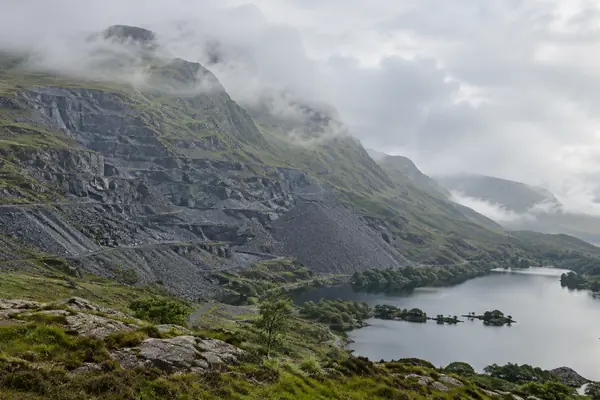
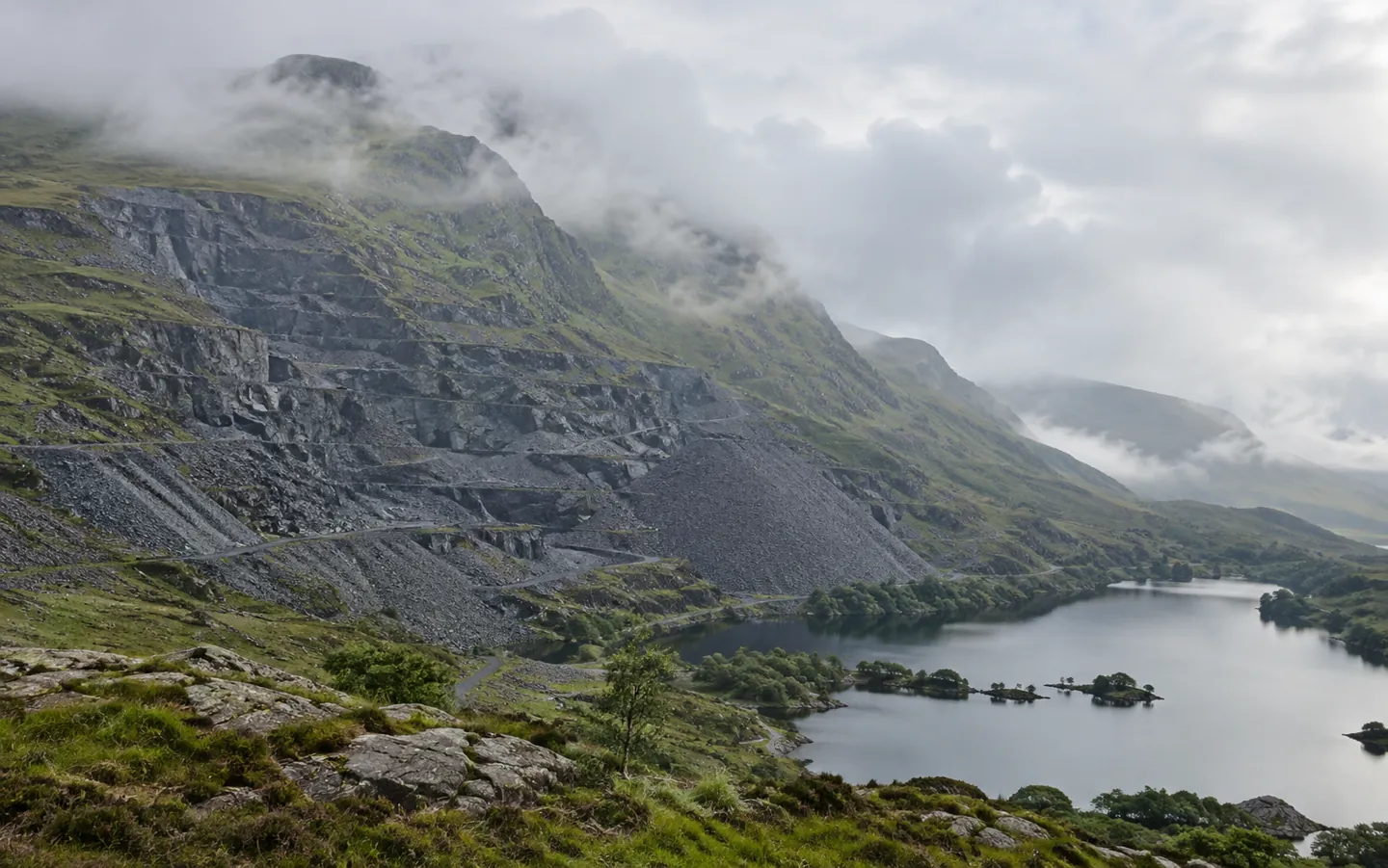
Squeezed and gently heated where Earth's plates pushed together, it became a rock that splits into thin, tough sheets. In northwest Wales, that rock built an industry that sent roofs around the world.
Sort the uses01Principles
02THE SHORT ANSWER
Three things that explain slate.
One from geology, one from craft, one from history.
GEOLOGY
Slate forms from shale or mudstone when horizontal compression and mild heating change its clay minerals, a low-grade metamorphism.
Sort the usesCRAFT
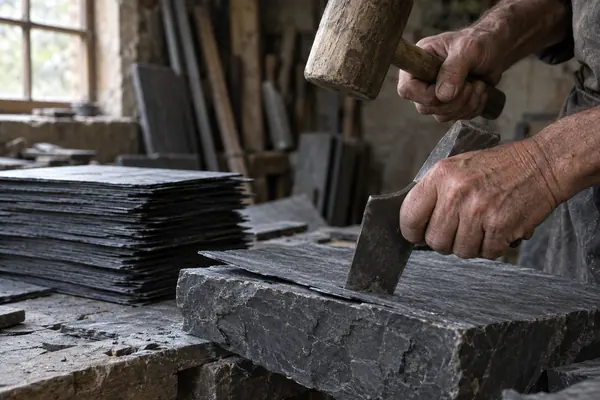
Flat clay and mica grains line up at right angles to the squeeze, so slate splits cleanly into thin sheets along that slaty cleavage.
How it splitsHISTORY
By the late 19th century, northwest Wales produced about a third of the world's roofing slates and architectural slabs.
See the numbers03A QUICK USE CHECK
Pick a use to see how slate earned its place there. The bar shows how important that use is today, from the main use to the mostly historic.
Based on Geology.com's reference page on slate. General information only.
04TWO NUMBERS WORTH KNOWING
One figure on the Welsh share of world slate,
one on the landscape now protected.
≈ ⅓
Share of world roofing slate from northwest Wales, late 1800s
The industry dominated world roofing-slate production from 1780 to 1940, exporting slate, technology and skilled quarry workers to the United States, continental Europe and Ireland.
WORLD OUTPUT · UNESCO
3,259 ha
Area of the Slate Landscape of Northwest Wales
Inscribed as a World Heritage Site in 2021, it has six parts, including quarries, mines, settlements, railways and the harbours built to ship slate.
WORLD HERITAGE · UNESCO
UNESCO notes the industry made the first known use of the circular saw for cutting stone, and that there is no active quarrying or mining within the protected property today.
05FOUR THINGS TO NOTICE
Slate is everywhere once you start looking: on roofs, paths and old buildings. These observations connect what you see to how the rock formed.
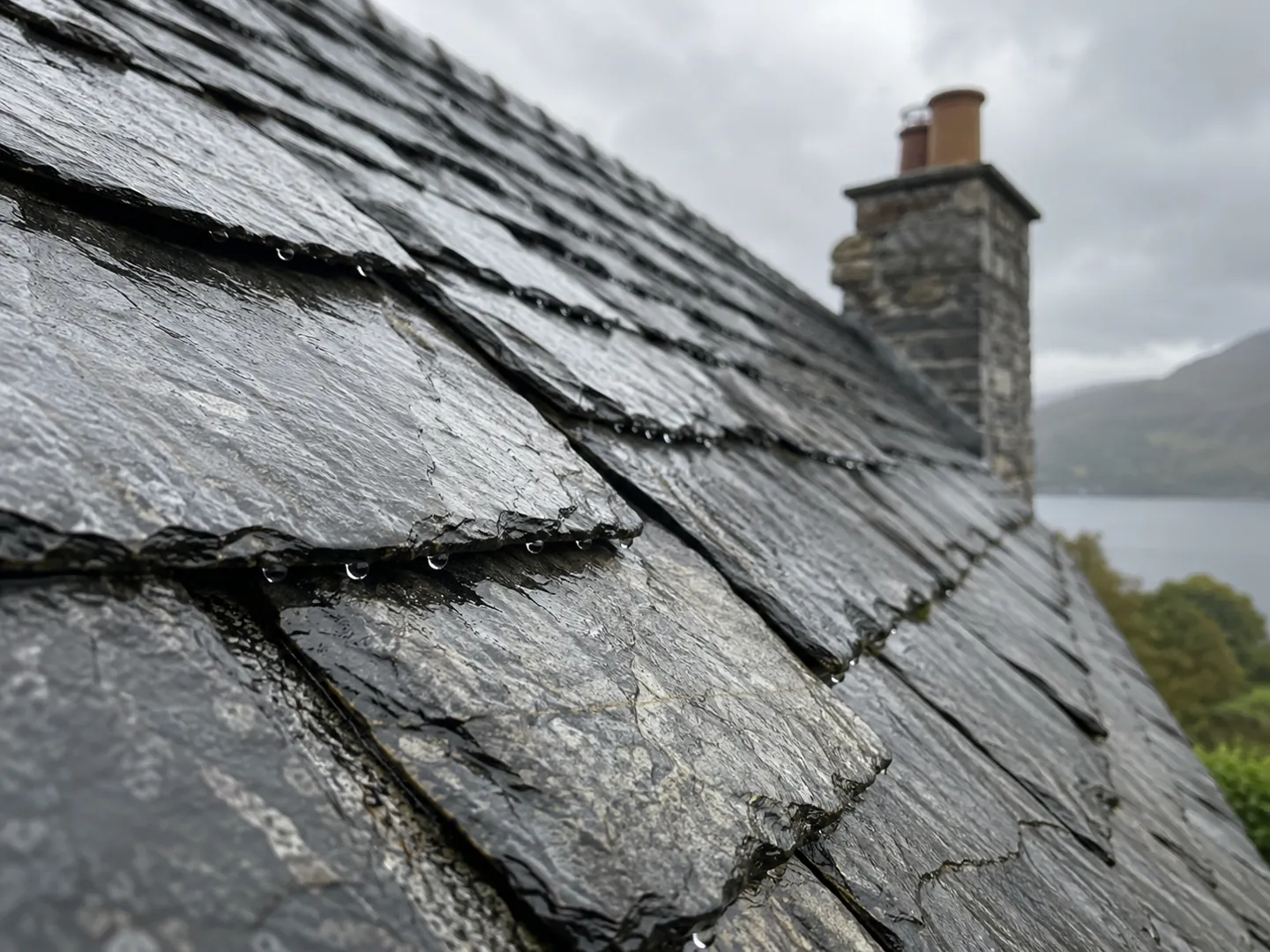
Most slate is grey, but it can be green, red, black, purple or brown, depending largely on its iron and organic content.
Thin, flat layers show the slaty cleavage that lets the rock be split into sheets.
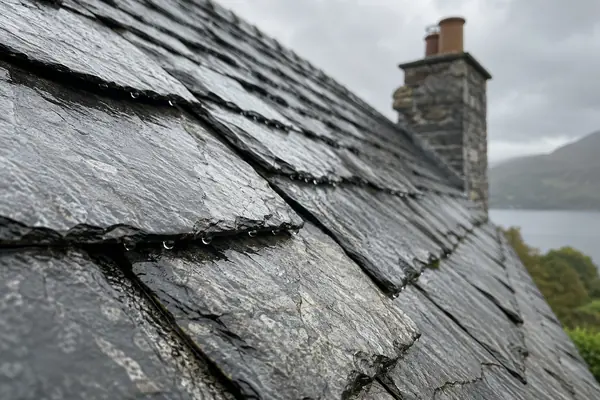
Slate absorbs very little water, which is one reason it lasts so well on roofs in wet climates.
The National Slate Museum in Llanberis, in workshops of the old Dinorwig quarry, has run slate-splitting demonstrations.
06WHY IT SPLITS
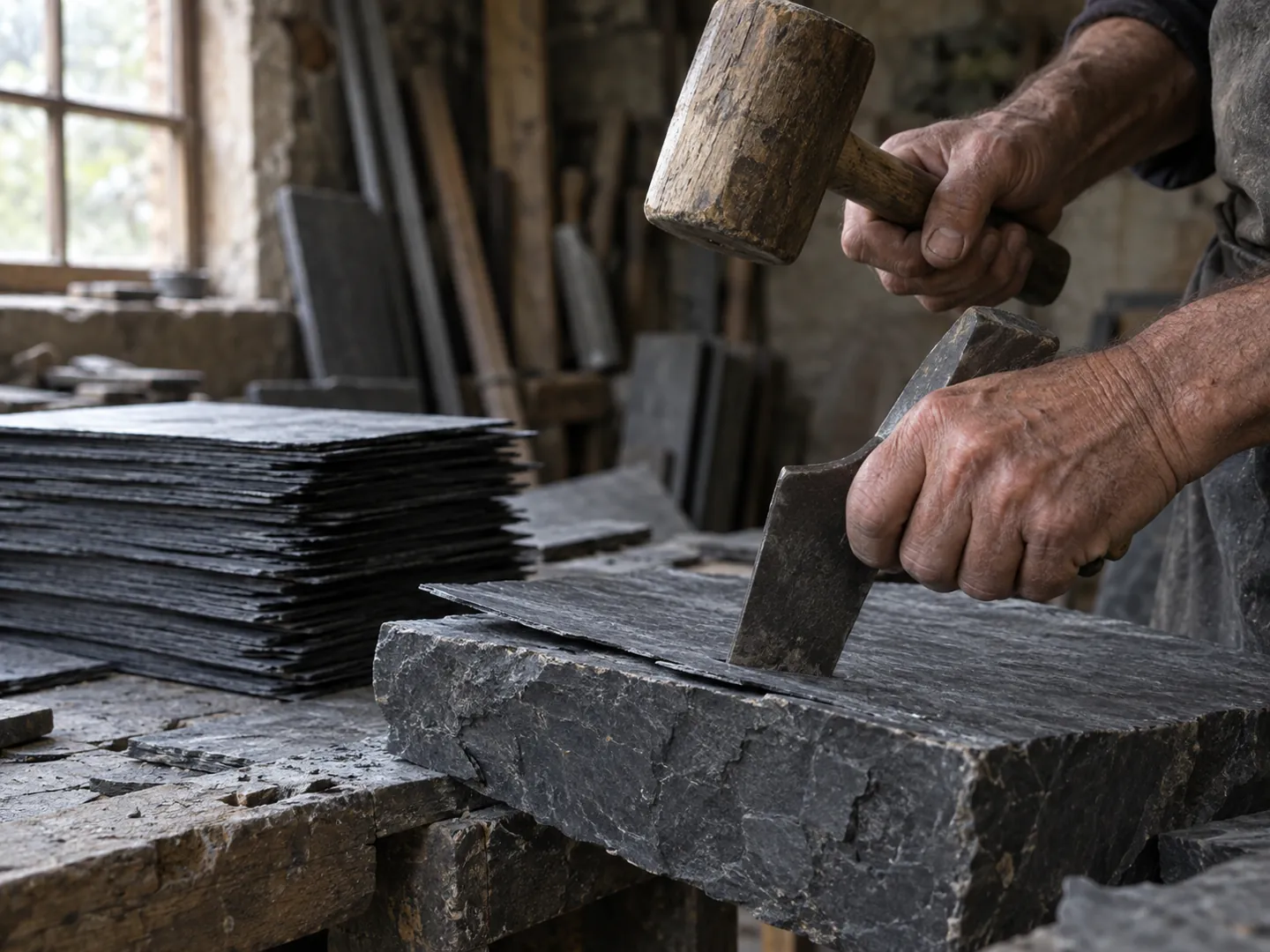
When an old sedimentary basin is caught at a convergent plate boundary, it is squeezed sideways and warmed. The flat clay and mica grains in the mud turn to face the same way, at right angles to the squeeze, often cutting across the original layers.
Those aligned grains give slate its slaty cleavage, so it parts cleanly into thin sheets. With more heat and pressure, the same rock would become phyllite, then schist and eventually gneiss.
07Questions
Slate forms from shale or mudstone. Horizontal compression and mild heating, often at a convergent plate boundary, change the clay minerals, making it a low-grade metamorphic rock.
Its platy grains of clay and mica line up in the same direction during metamorphism. This slaty cleavage lets the rock split cleanly along those planes.
It is durable, can be cut into thin sheets, absorbs very little moisture and holds up well against freezing water. Roofing is the largest use of mined slate.
UNESCO says that by the late 19th century northwest Wales produced about a third of the world's roofing slates and architectural slabs, and dominated world production from 1780 to 1940.
Yes. The Slate Landscape of Northwest Wales was inscribed as a UNESCO World Heritage Site in 2021. It lies within Snowdonia National Park.
08Sources
ABOUT THIS NAME
doodleslate.com is part of the DoodleSale portfolio. It isn't in an auction right now, but you can ask about leasing it.